
Last updated September 24, 2026
Free in-home measure and quote - PGT, CGI and CWS impact lines compared on your actual openings, style by style
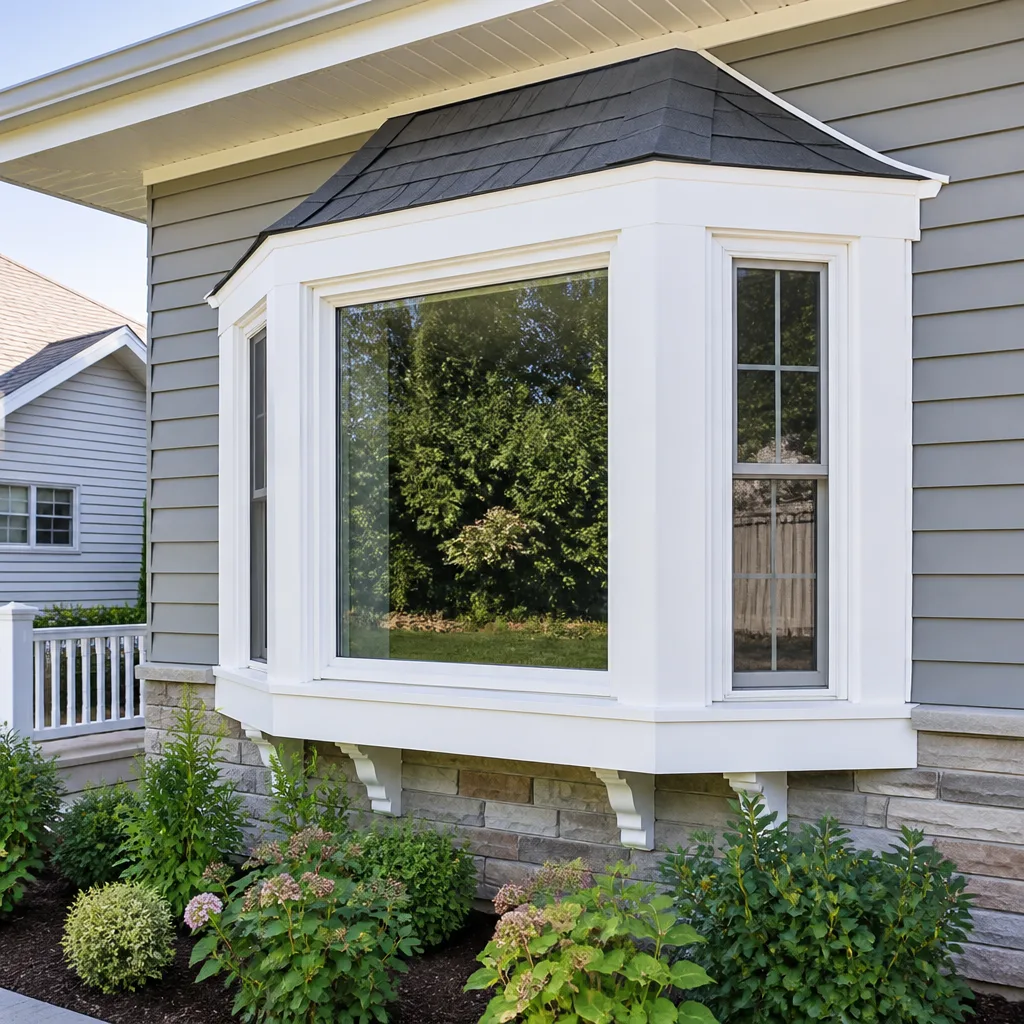
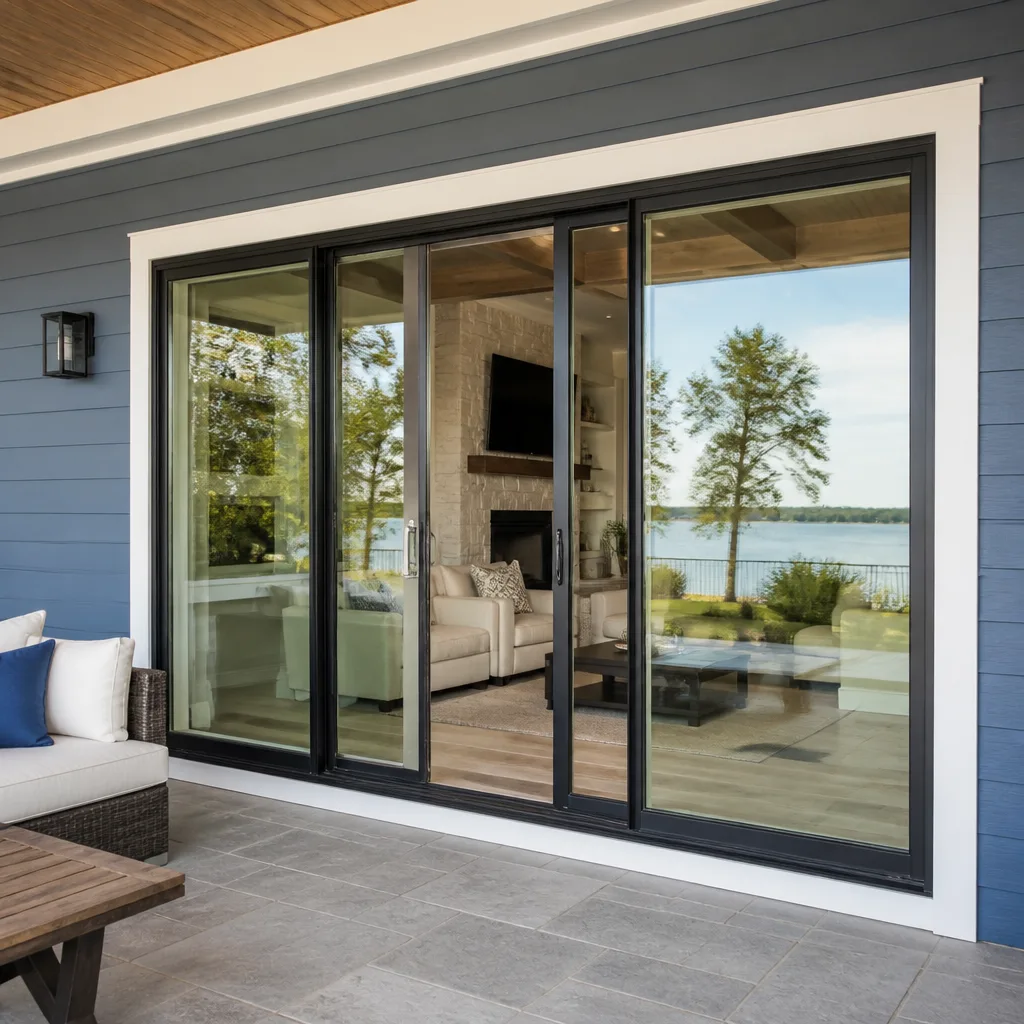
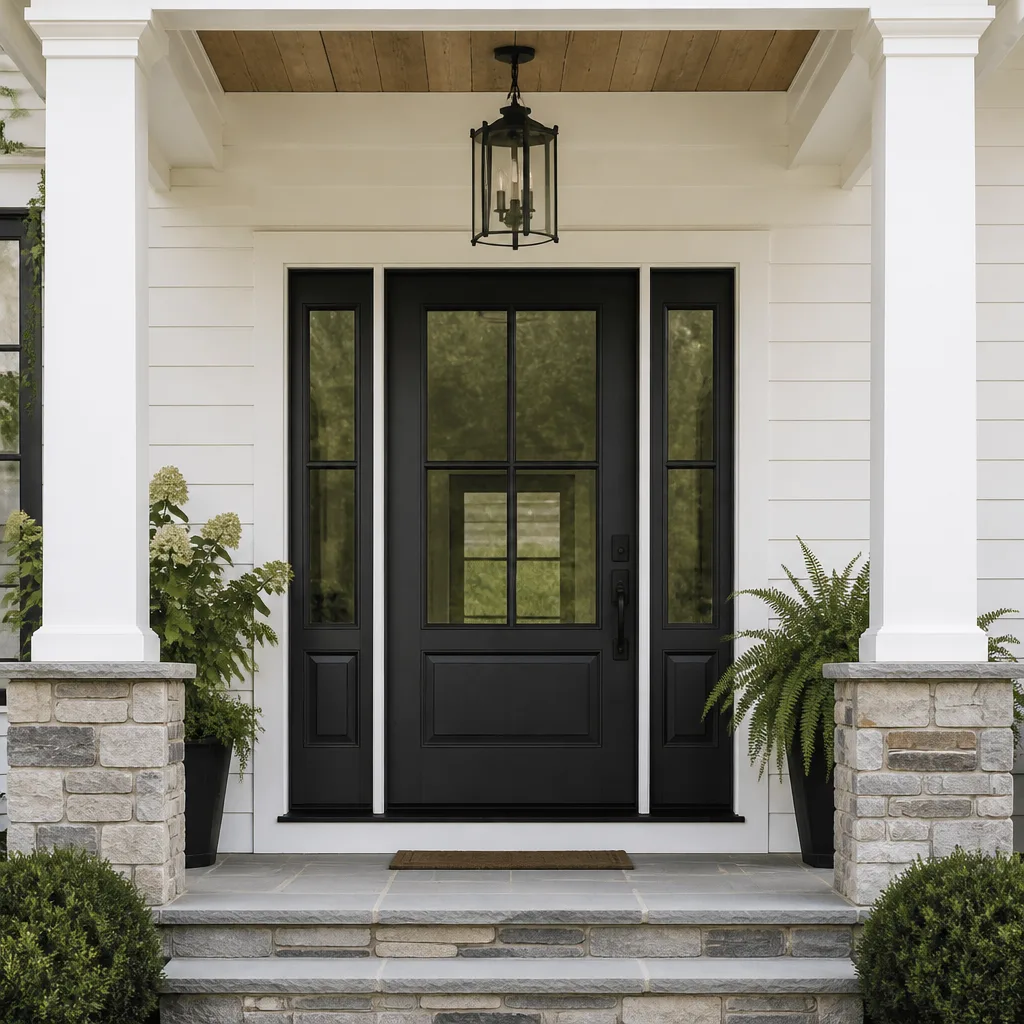

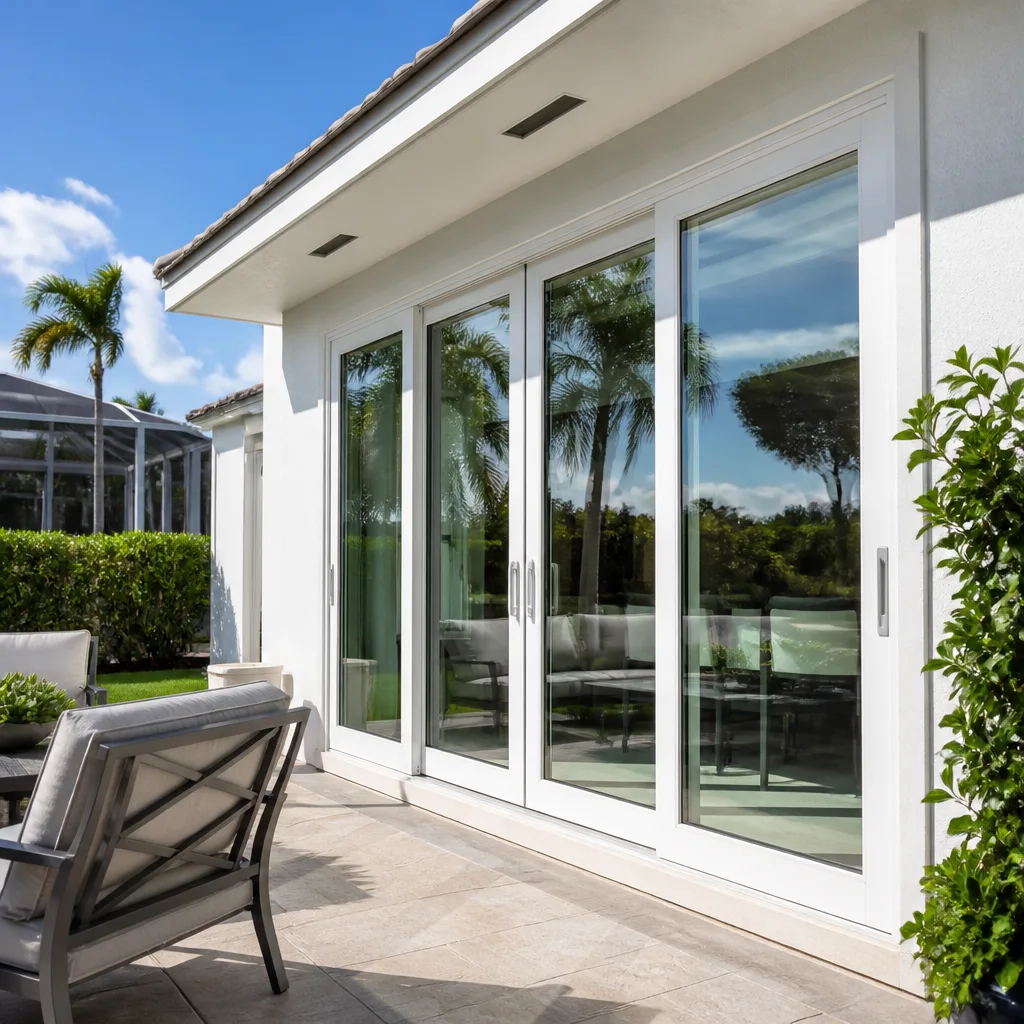
 Before
 After
After Before
 After
After Before
 After
AfterSeasonal Windows & Doors Care for Weston: Year-Round Homeowner’s Guide
Most homeowners in Weston prepare their windows for hurricane season and stop there. They skip the December rinse cycle that removes salt aerosol accumulated from dry-season trade winds, a $20 task that prevents the aluminum corrosion that makes hardware replacement necessary by year eight. In this guide, you’ll learn why Weston does not have four seasons, it has two threat environments, each degrading your openings through entirely different mechanisms, and the specific care protocols that protect the investment you made when you bought or built here.
Quick Answer
Seasonal window and door care in Weston means a two-season maintenance calendar: pre-hurricane storm prep in May and post-season corrosion reset in November. The May protocol focuses on impact hardware function, weep hole clearance, and screen integrity. The November protocol centers on fresh-water rinsing of aluminum frames to remove accumulated salt aerosol, re-lubrication of moving parts, and assessment of seal performance before dry-season UV exposure accelerates degradation.
Table of Contents
- Weston’s Two-Season Reality: Hurricane Moisture vs. UV Salt-Drift
- May Storm Prep: The Pre-Hurricane Protocol
- November Corrosion Reset: The Post-Season Rinse Cycle
- Aluminum Frame Maintenance: The Correct Fresh-Water Rinse Sequence
- Impact Door Hardware Inspection and Re-Lubrication
- Screen Replacement Timing: Beating the June Backlog
- Using FPL’s Dry-Season Efficiency Window for Glass Performance Assessment
- Product-Specific Care for PGT, CGI, and ViewLux Installations
 Before
 After
AfterWeston’s Two-Season Reality: Hurricane Moisture vs. UV Salt-Drift
Weston sits 8 miles inland from the Atlantic, but that distance does not eliminate coastal exposure. Dry-season trade winds carry salt aerosol across the Everglades margin and deposit it on aluminum frames, particularly on east-facing elevations. During wet season, that same salt residue activates with humidity and begins galvanic corrosion at frame corners, weep holes, and anywhere anodized coatings have micro-scratches.
The result is two distinct damage mechanisms:
- June-November hurricane and moisture season: Wind-driven rain tests seal integrity, debris impact stresses impact-rated laminates, and sustained humidity accelerates corrosion at any breach in the finish. Multi-point locking hardware on impact doors must operate under storm-load conditions, meaning corrosion or grit in the mechanism is not a maintenance item, it is a failure point.
- December-May UV and salt-drift season: Low humidity and high solar angle bake salt residue into frame surfaces. UV degrades PVC weatherstripping and gasket compounds. Thermal cycling, daily temperature swings of 15-20°F in January, stresses sealant bonds as frames expand and contract.
We’ve measured the difference. In our window installations in Weston, east-facing aluminum frames that receive no December rinse show pitting at year six. Those with annual November rinsing and light silicone application at corner keys reach year twelve with surface integrity intact. The maintenance is not elaborate. It is specific.
The neighborhoods west of Bonaventure Boulevard, closer to the Everglades edge, see higher dry-season salt deposition than those near Weston Hills. Homes in Savanna and Windmill Ranch Estates with expansive glass walls on eastern elevations are particularly exposed. If your home faces Indian Trace or sits on a lot with unobstructed east exposure, the November protocol matters more for you than for a home shielded by the Weston Town Center corridor.
May Storm Prep: The Pre-Hurricane Protocol

The National Hurricane Center issues its seasonal outlook in late May. Your personal protocol should be complete before that announcement. Here is the sequence we use when inspecting Weston homes before storm season.
- Inspect impact-rated glazing for laminate edge exposure. Impact windows from PGT, CGI, and other manufacturers use laminated glass with interlayers that can delaminate at edges if water has penetrated the frame pocket. Look for fogging or white haze at the glass perimeter, particularly on south-facing units that take the most thermal stress. Delamination is not cosmetic. It is a failure of the impact membrane.
- Cycle every operable window and door through full open-close-lock sequences. Impact doors with multi-point locks, the standard for door installations in Weston, must engage all three points smoothly. If the handle requires extra force, the locking points are misaligned or corroded. Storm-load pressure will compound that misalignment.
- Clear weep holes with a pipe cleaner or compressed air. Weep holes allow water that enters the frame track to drain to the exterior. Blocked weep holes force water into the wall cavity. In Weston, where afternoon thunderstorms drop 2-3 inches in an hour, this is not theoretical. We’ve documented frame rot in Bonaventure homes where weep holes were obstructed by gecko nests and accumulated pollen.
- Inspect and test weatherstripping compression. Close a window or door on a strip of paper. If the paper slides out without resistance, the weatherstripping has compressed beyond functional recovery. Replacement is straightforward and prevents both water intrusion and air infiltration that drives cooling loads.
- Verify screen frame integrity and mesh tension. Screens are not storm protection, but they are the first debris filter. A torn screen allows leaves and organic matter to accumulate in tracks, accelerating corrosion and blocking drainage. More critically, a screen that blows out in a tropical storm becomes debris itself.
- Document the condition. Photograph each opening from interior and exterior angles, noting any findings. This baseline is your evidence if storm damage occurs and insurance questions pre-existing condition. Sightline’s Haven Standard requires this documentation on every visit; we recommend homeowners maintain their own parallel record.
The May protocol takes 2-3 hours for a typical 4-bedroom Weston home. It is not a substitute for professional inspection if you suspect seal failure or frame degradation, but it catches the preventable failures that turn tropical storms into interior damage.
November Corrosion Reset: The Post-Season Rinse Cycle
When hurricane season ends, most homeowners in Weston exhale and move on. This is the error. November through early December is when salt aerosol accumulated over six months of dry-season trade winds must be removed before UV baking fixes it to the frame surface.
The mechanism is straightforward. Salt (NaCl) is hygroscopic, it attracts moisture. During wet season, that moisture is abundant and corrosion proceeds electrochemically. During dry season, the salt remains crystalline but UV radiation and thermal cycling degrade the anodized or painted finish that protects the aluminum substrate. By the following May, the salt is embedded in micro-fissures and the corrosion rate accelerates exponentially.
The November protocol addresses this:
- Rinse, don’t scrub. High-pressure washing drives water past seals and into frame cavities. Use a garden hose with a soft spray nozzle, working top to bottom to prevent dirty water from drying on lower frames.
- Use fresh water only. Detergents can leave residues that alter surface chemistry. If frames are visibly soiled, a mild dish soap solution followed by thorough rinsing is acceptable, but the critical step is complete salt removal, not cosmetic cleaning.
- Dry before lubricating. Trapped moisture in tracks and locking mechanisms accelerates corrosion faster than ambient humidity. Use compressed air or allow 2-3 hours of sun exposure before applying lubricant.
- Inspect corner keys and strike plates. These are the points where salt accumulates invisibly due to capillary action and galvanic potential differences between dissimilar metals. A flashlight and dental mirror reveal what casual inspection misses.
In Weston, where municipal water is moderately hard (140-180 ppm calcium carbonate), water spotting is a cosmetic concern but not a corrosion driver. The spots are calcium, not chloride. Wipe dry with a microfiber cloth if appearance matters to you.
Homes in the Isles at Weston and Savanna, with their extensive lakefront exposure, see additional salt loading from wind-driven spray during winter cold fronts. These homes benefit from a mid-February rinse in addition to the November cycle. We’ve documented this pattern in our window replacement work in Weston, where lakefront homes show 40% faster hardware degradation than interior lots.
Aluminum Frame Maintenance: The Correct Fresh-Water Rinse Sequence
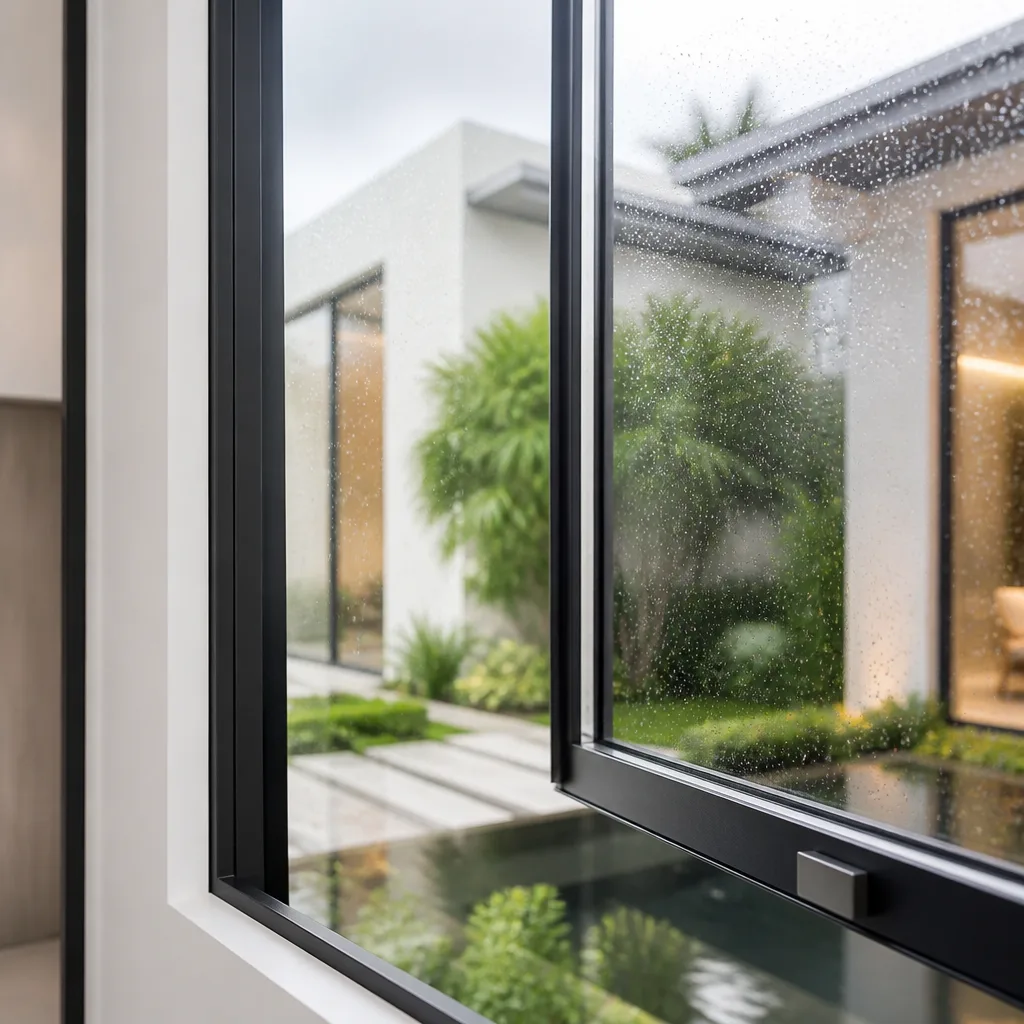
Aluminum frames dominate window installations in Weston for good reason: strength-to-weight ratio, corrosion resistance when properly maintained, and compatibility with impact-rated glazing systems. But aluminum is not maintenance-free. The protective oxide layer that forms naturally is thin, 4-5 nanometers, and can be compromised by chloride exposure, galvanic contact with dissimilar metals, or alkaline cleaning agents.
The correct rinse sequence for Weston conditions:
- Pre-wet surrounding surfaces. Rinse adjacent stucco, plants, and paving first to reduce detergent absorption if cleaning solution is used. This also establishes drainage patterns.
- Rinse from top to bottom, exterior first. Start with the head of the frame and work down the jambs and sill. The objective is to carry dissolved salts and particulates off the frame, not redistribute them.
- Direct water at a downward angle, never upward into the frame interior. Weep holes drain outward. Forcing water inward reverses the drainage path and can flood the glazing pocket.
- Pay particular attention to the sill and track areas. These are collection points for wind-borne debris and salt. In sliding doors, the track must be cleared of grit that abrades rollers and compromises the seal between sash and frame.
- Rinse weep holes individually. A brief direct stream confirms drainage. If water backs up, the weep channel is obstructed and requires mechanical clearing.
- Dry with clean microfiber, working with the frame direction. For horizontal sills, wipe toward the weep holes to assist final drainage. For vertical jambs, wipe downward.
- Inspect after drying for white powdery residue or pitting. White powder indicates active corrosion product (aluminum oxide/hydroxide). Pitting means the substrate is exposed and professional assessment is warranted.
The specific areas where salt accumulates invisibly:
- Weep holes: Capillary action draws salt-laden water into the channel, then evaporation concentrates it. We’ve found weep holes in Weston homes completely occluded by salt and corrosion product after five years of neglect.
- Corner keys: The mechanical joints where frame extrusions meet are slightly discontinuous, creating micro-crevices where salt crystallizes. Thermal expansion and contraction work these crystals against the finish.
- Strike plates and keeper adjustments: Steel fasteners in aluminum frames create galvanic couples. Salt accelerates the potential difference. The result is seized screws, misaligned latching, and eventually frame damage from forcing the hardware.
The entire sequence for a typical home takes 90 minutes. Materials cost under $20: hose nozzle, microfiber cloths, pipe cleaners, and a spray lubricant specified for aluminum hardware. The alternative is frame replacement at $400-$800 per opening, or hardware replacement at $150-$300 per door.
Impact Door Hardware Inspection and Re-Lubrication
Impact-rated doors in Weston, whether from CGI, PGT, or other manufacturers, rely on multi-point locking systems that distribute storm-load forces across the frame. A single-point lock concentrates stress and risks frame failure under positive pressure. The multi-point system is only as reliable as its maintenance.
The inspection protocol:
- Cycle the lock with the door open. All locking points should extend and retract smoothly. Binding indicates misalignment, corrosion, or debris in the mechanism.
- Check alignment with the door closed but unlatched. The locking points should enter their keepers without manual guidance. If you must lift or press the door to engage the lock, the frame or hinges have settled.
- Apply lubricant to all moving points. Use a dry-film lubricant or light machine oil, not WD-40 which evaporates and leaves a gummy residue. Work the mechanism through 10-15 cycles to distribute.
- Inspect the door bottom sweep and jamb weatherstripping. These are not structural but they prevent water intrusion that corrodes the mechanism from below. Compression set, permanent deformation from long-term pressure, means replacement.
- Test the deadbolt independently. The deadbolt is your security lock, not your storm lock, but it operates in the same corrosive environment. It should extend fully without force.
We’ve replaced multi-point hardware in Weston homes where the homeowner reported “the door is just stiff” for three years. By the time we arrived, the main locking cam had corroded to the point of fracture. The door would have failed to secure under storm load. The replacement cost was $280 in parts plus labor. The May lubrication would have prevented it.
For homeowners with impact door installations in Weston facing direct lake or golf course exposure, we recommend biannual lubrication, May and November, rather than annual. The additional 15 minutes is insurance against accelerated corrosion.
Screen Replacement Timing: Beating the June Backlog

Screens are the most neglected component of window and door systems. They are also the most time-sensitive to replace correctly. In Weston, the error is waiting until June, when the first tropical wave reminds you that openings need protection.
The problem is structural. Screen mesh in South Florida is not just insect barrier. It is debris filtration and, in some installations, part of the pressure-equalization path for impact-rated systems. Torn or sagging mesh allows organic matter into tracks, promotes mold in the glazing pocket, and in extreme cases, can be pulled into the opening by pressure differentials during storms.
The timing logic:
- April replacement avoids the June-September backlog when every window company in Broward County is responding to storm-prep demand. Lead times stretch from one week to four. You are left with unprotected openings at the season’s start.
- April replacement allows inspection of the screen frame itself. Aluminum screen frames corrode at the corners and at attachment points. Replacing mesh on a compromised frame is false economy.
- April replacement coincides with pollen season conclusion. New mesh is not immediately coated with the yellow film that reduces airflow and visibility.
We’ve measured this at Sightline. In 2023, our April screen orders in Weston had a 5-7 business day turnaround. June orders averaged 18 business days. The difference is not manufacturing capacity, it is installer scheduling. Every company prioritizes storm-prep and emergency calls over routine maintenance in peak season.
For homes with window replacements in Weston using ViewLux or PGT systems, screen compatibility is manufacturer-specific. Generic replacement screens may not seat correctly in the retention groove, compromising both function and appearance. Specify the manufacturer line when ordering.
Using FPL’s Dry-Season Efficiency Window for Glass Performance Assessment
Florida Power & Light publishes seasonal efficiency guidance that most homeowners ignore. The relevant insight for Weston: December through February is the only period when you can assess glass thermal performance without the confounding variable of solar heat gain.
During wet season, exterior temperatures are high, solar irradiance is extreme, and your cooling system runs continuously. You cannot isolate window U-factor, the rate of non-solar heat transfer, from SHGC, solar heat gain coefficient. The two variables are entangled.
In December-February, when Weston mornings drop to 55-60°F and afternoons reach 75-80°F, the thermal gradient across your glass is consistent and measurable. This is when to:
- Measure interior surface temperature of glass on cold mornings. A non-contact infrared thermometer, $25 at any hardware store, gives you data. Modern low-E glass with argon fill should read within 3-5°F of room air temperature. Reading 10°F or more below room temperature indicates seal failure and argon loss.
- Check for condensation patterns. Condensation at the glass perimeter, where the spacer is located, indicates warm-edge spacer failure. Center-glass condensation indicates overall U-factor degradation. The pattern tells you what has failed.
- Compare east and west elevations on the same morning. Equal performance is expected. A 5°F difference suggests coating degradation or installation variance on the poorer-performing side.
- Document with photographs and notes. This is your baseline for the following year. Accelerated change year-over-year predicts imminent failure.
The FPL efficiency window is also the optimal period for professional energy assessment. HVAC contractors are less busy, and window companies can schedule blower-door and infrared camera diagnostics without the wet-season backlog. If your assessment reveals performance degradation, replacement planning can proceed during the spring shoulder season, with installation completed before hurricane season begins.
For homeowners considering new window installations in Weston, the December-February assessment of existing glass establishes the performance benchmark that new units must exceed. Without this baseline, you are comparing manufacturer specifications to unknown field conditions.
Product-Specific Care for PGT, CGI, and ViewLux Installations

Not all impact-rated systems age identically. The manufacturer-specific details matter for maintenance.
PGT WinGuard and EnergyVue: PGT uses a stainless-steel roller system in sliding doors that is notably corrosion-resistant but requires specific clearance adjustment. The adjustment screw is accessed through the frame interior, not the edge. We’ve found Weston homeowners stripping adjustment points by using incorrect tools. The correct tool is a 3/16-inch hex key, not a Phillips screwdriver. PGT’s laminated glass uses a thicker interlayer than some competitors, 0.090 inch versus 0.060 inch, which improves impact resistance but requires slightly different handling if edge delamination occurs.
CGI Estate Collection and Sentinel: CGI’s aluminum extrusions use a heavier wall thickness than industry standard, 0.080 inch versus 0.060 inch, which extends frame life but increases thermal bridging. The maintenance implication: condensation at the frame interior is more likely with CGI than with thermally broken alternatives. The solution is not frame replacement but humidity management and, in extreme cases, supplemental dehumidification. CGI’s multi-point hardware uses a different cam geometry than PGT; lubrication points are not interchangeable.
ViewLux: ViewLux specializes in large-format and custom geometric units common in contemporary Weston homes, particularly in Savanna and Windmill Ranch Estates. The maintenance consideration is scale: a 10-foot by 8-foot fixed unit cannot be rinsed from ground level without extension equipment, and the hardware, if operable, is heavier-duty than standard sizes. We’ve documented cases where homeowners deferred maintenance on high ViewLux units due to access difficulty, then faced seal failure that required crane access for replacement. The prevention is scheduling professional maintenance for any unit beyond safe ladder reach.
For all three manufacturers, warranty terms require documented maintenance for claim validity. PGT and CGI explicitly exclude corrosion damage from warranty coverage if maintenance records are absent. The Haven Standard’s documented photo record satisfies this requirement.
Common Mistakes to Avoid
- Pressure-washing impact-rated frames. High-pressure water penetrates weep holes and glazing pockets, flooding the frame interior and accelerating corrosion. Use garden-hose pressure only.
- Using vinegar or acidic cleaners on aluminum. Acid strips the anodized finish and initiates pitting. The “natural cleaning” trend has damaged more Weston frames than hurricane exposure.
- Ignoring screen damage until June. By the time tropical weather threatens, every installer is booked. April replacement protects openings at season start.
- Lubricating locks without cleaning first. Oil over grit creates abrasive paste. Clean tracks and mechanisms with compressed air before any lubricant application.
- Assuming impact rating eliminates maintenance. Impact-rated glass survives debris strike. The frame and hardware that hold it do not survive corrosion. The rating is not a maintenance exemption.
- Waiting for visible failure to assess performance. Fogged glass is end-stage seal failure. The December infrared assessment catches argon loss before visible symptoms appear.
- Using generic replacement parts on manufacturer-specific systems. Screen mesh retention, roller dimensions, and lock cam geometry vary by manufacturer. Generic parts fit poorly and fail quickly.
When to Call a Professional
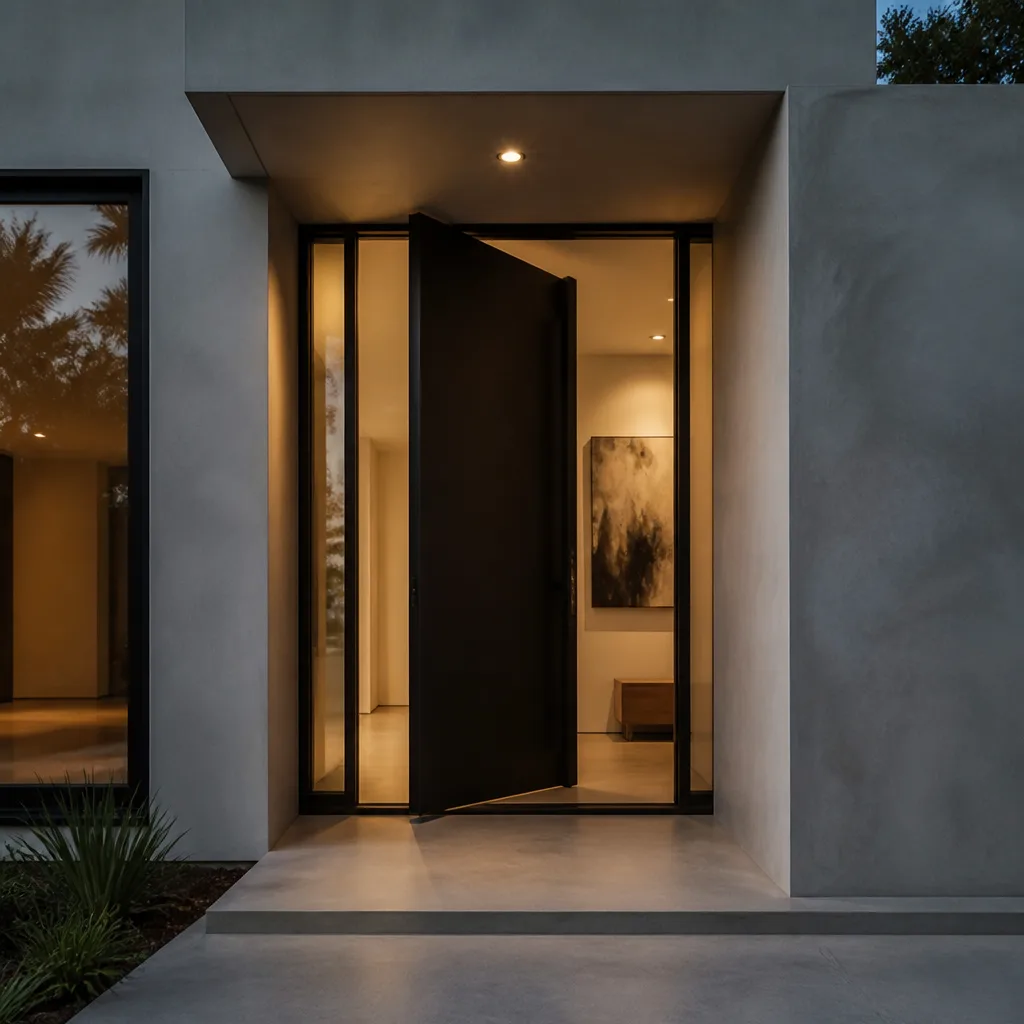
Some conditions exceed homeowner maintenance scope. Call for professional assessment if you observe: fogging or haze between glass panes, indicating seal failure; corrosion pitting that exposes bare aluminum substrate; multi-point lock misalignment that cannot be corrected by adjustment screws; frame deformation or settling that causes binding in operable units; or water intrusion into the wall cavity, evidenced by staining at the interior frame perimeter.
Sightline Windows & Doors Weston offers free estimates in Weston. Our measured survey produces a written scope and price before any work is proposed, under Haven Clause 1. Every technician is background-checked, uniformed, and identified by license number before arrival. Call (754) 812-9260 to schedule.
Frequently Asked Questions
Once annually in November, with a mid-February rinse for lakefront or east-facing homes with unobstructed exposure. The November rinse removes accumulated salt before UV baking fixes it to the surface. The February rinse addresses additional salt loading from winter cold-front winds. Call (754) 812-9260 for an exact assessment of your home’s exposure profile, estimates are free.
No. Pressure washing forces water past seals and into frame cavities, causing more damage than the salt it removes. Use a garden hose with a soft spray nozzle, directed downward at a shallow angle. The objective is dissolution and gentle carry-off, not mechanical removal. If your frames have heavy soiling, professional cleaning with controlled methods is safer than high-pressure equipment.
Three indicators: the handle requires increasing force to engage, one or more locking points fails to extend or retract fully, or the door must be lifted or pressed to align the lock with its keepers. Any of these conditions means the mechanism is compromised and may fail under storm-load pressure. Impact hardware is not a DIY repair, the alignment tolerances are precise and incorrect adjustment can void the impact rating. Call (754) 812-9260 for inspection.
Fogging indicates seal failure and argon loss. The insulating gas has escaped and moist exterior air has entered the glazing cavity. In Weston’s humidity, this condition accelerates rapidly, the moisture breeds mold on the interior glass surfaces and the thermal performance degrades to that of single-pane glass. The December-February assessment period is optimal for detection, before wet-season humidity makes the fogging constant. Replacement is the only remedy.
Installer availability. In 2023, our April screen orders in Weston had 5-7 business day turnaround. June orders averaged 18 business days. Unprotected openings at season start are a vulnerability. April replacement also avoids pollen coating on new mesh and allows frame inspection before the storm-prep rush. Call (754) 812-9260 to schedule April screen service.
Yes. Every Sightline visit produces a documented photo record under Haven Clause 4, Evidence on Every Job. This documentation satisfies manufacturer warranty requirements for maintenance records. Our written scope and price, provided before work begins under Haven Clause 1, also serves as evidence of professional service. We do not charge extra for this documentation, it is standard on every engagement.
The Bottom Line
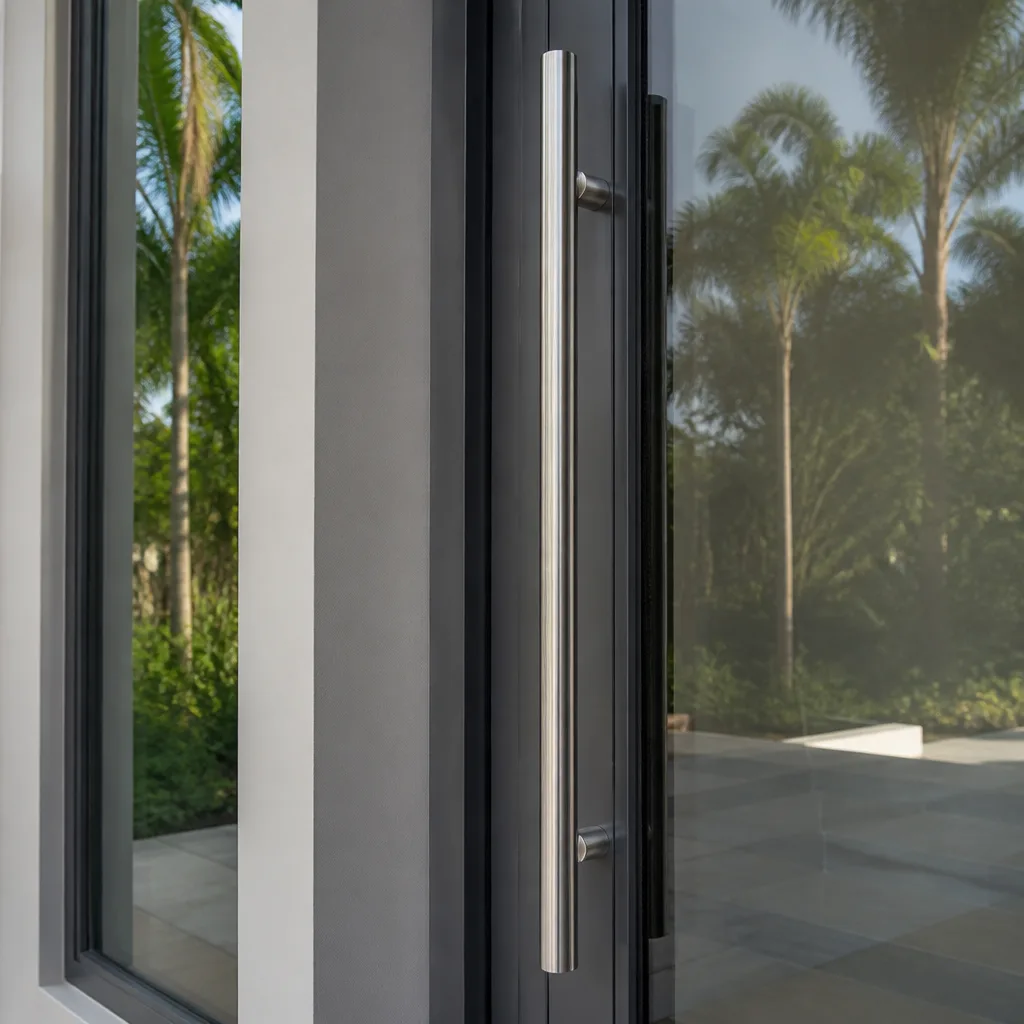
Weston’s climate demands a two-season maintenance calendar, not four-season generic advice. The May protocol prepares your openings for hurricane-season moisture and wind. The November protocol removes the salt aerosol that dry-season trade winds deposit, before UV exposure bakes it into frame surfaces. Specific attention to weep holes, corner keys, strike plates, and multi-point hardware prevents the corrosion that makes replacement necessary by year eight. Screen replacement in April avoids the June backlog. The December-February efficiency window provides the only reliable baseline for glass performance assessment. These are not elaborate tasks. They are precise tasks, performed at the correct time, with correct materials. The alternative is premature replacement of frames and hardware that proper maintenance would have preserved.
Written by Sonia Raman, Owner at Sightline Windows & Doors Weston, serving Weston since 2012.